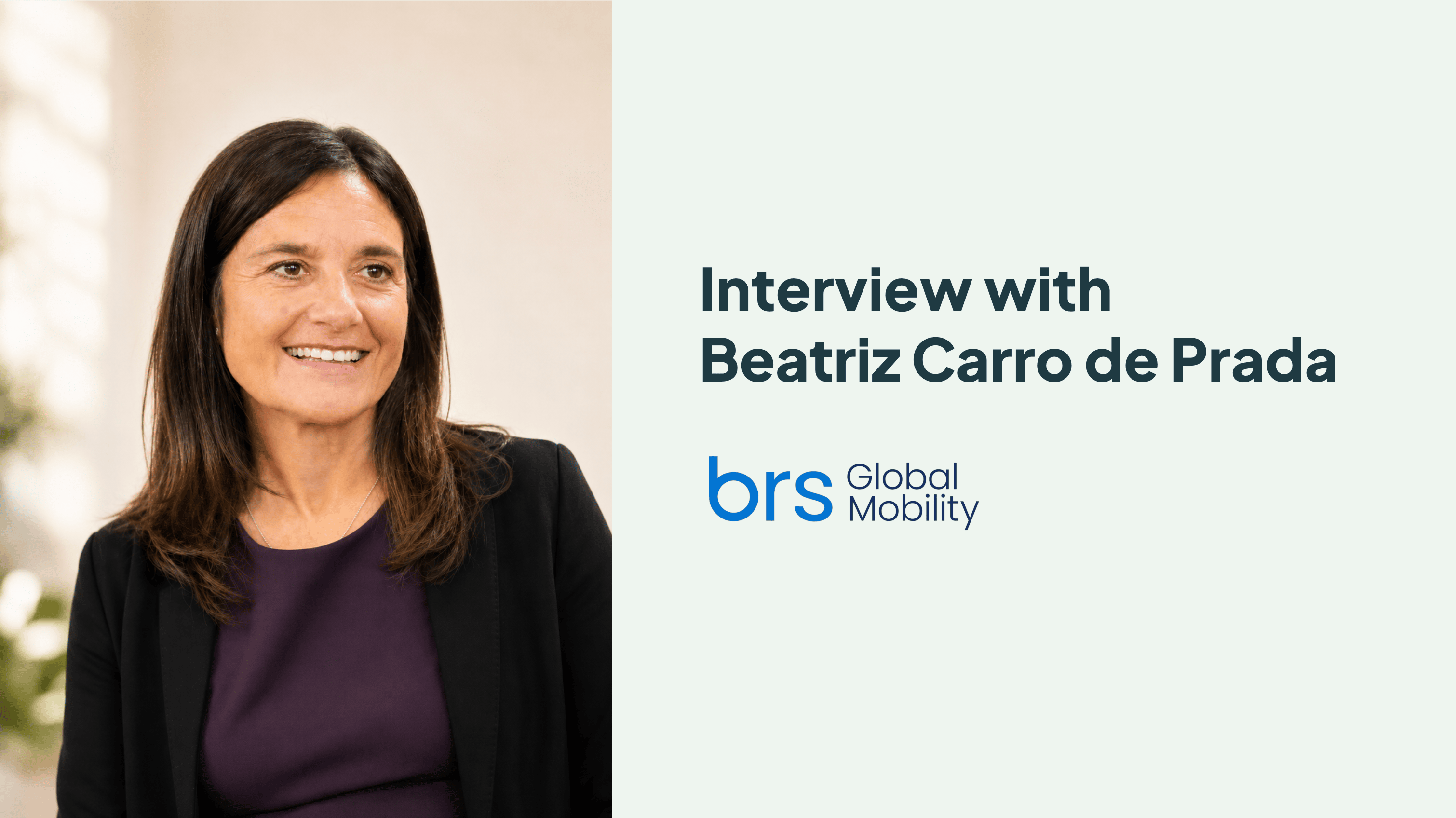
From moving seven times in nine years to becoming one of the leading voices in relocation and international mobility, this is the journey of Beatriz Carro de Prada , Managing Director & Founding Partner at BRS Global Mobility . Her career, personal experience across different countries, and strategic vision of the sector have made her a key reference for understanding how international transfers are evolving.
In this interview, Beatriz shares how BRS Global Mobility has successfully adapted to an increasingly complex environment, where flexibility, efficiency, and personalised solutions are essential to meet the challenges of global mobility. She also explains how collaborating with Apartool helps streamline the search for corporate accommodation, providing more agile and tailored solutions for both companies and relocated professionals.
Interview with Beatriz Carro de Prada About BRS Global Mobility BRS Global Mobility has been facilitating employee mobility worldwide for over 25 years. How have corporate needs changed during this time, and how have you adapted to those changes?
International mobility has evolved significantly in recent years.
On one hand, mobility policies have transformed. Fewer companies now offer traditional expatriation packages, which used to include extensive benefits such as housing, schooling for children, or generous housing allowances. Today, organisations are opting for more flexible and sustainable models, hiring employees locally or managing relocations with tighter budgets.
The profile of relocating professionals has also changed. They tend to be younger, highly international, adaptable, and with fewer family ties. These new profiles value different aspects, such as international experience, quality of life, work flexibility, and support with cultural and administrative integration.
At BRS Global Mobility, we have adapted to these changes by expanding our services and providing more personalised, flexible, and efficient solutions that meet both the needs of companies and the expectations of employees.
Our goal remains the same: to ensure a smooth transition and a positive experience for everyone involved in the international mobility process.
In your line of work, it is essential to consider both the needs of the companies managing relocations and those of the employees themselves who decide to take the step of moving. What unique value does BRS Global Mobility offer to each?
Our key differentiator lies in the personalised approach we provide to both companies and relocating employees.
For companies, we always work in alignment with their mobility policies and maintain constant communication. We keep them informed of any relevant matters concerning the onboarding and adaptation of their employees, ensuring the experience is efficient and satisfactory.
Meanwhile, each employee is supported by a dedicated consultant throughout the entire relocation process. This enables us to understand their needs, expectations, and personal circumstances firsthand, allowing us to tailor our services to each individual case.
We recognise that every relocation is unique and that no two processes are the same. Therefore, we customise our services to provide bespoke solutions, facilitating not only the practical aspects of the move but also the integration of the employee and their family into the new destination. This combination of personal attention, flexibility, and expertise allows us to deliver value to both the companies and the individuals who place their trust in us.
You highlight excellence, sustainability, and social responsibility as key elements of your DNA. How do you incorporate all these factors into your service?
In the realm of sustainability, we were the first relocation company to achieve ISO 14001 certification for environmental management. Furthermore, our Barcelona offices were pioneers in installing solar panels within the building. This commitment has been recognised with multiple sustainability awards over the years.
Excellence is another cornerstone of our approach. We strive to deliver a highly personalised, top-quality service, reflected in a 98% client satisfaction rate. Each year, we also receive recognition for excellence from our international partners and clients.
Finally, social responsibility is integral to the way we conduct business. We believe that companies should generate a positive impact on their environment, which is why we promote initiatives that contribute to the wellbeing of our employees, clients, and communities, always with a sustainable, long-term perspective.
This combination of excellence, sustainability, and social responsibility is what enables us to continue setting the benchmark in the international mobility sector.
On corporate accommodation Housing is a fundamental element of your mobility services. What role does corporate accommodation play, and how have you integrated it into your daily operations?
Housing has a direct impact on employees’ experience and adaptation to their new location. At BRS Global Mobility, we manage both long-term accommodation and temporary corporate housing, which allows employees to settle in quickly while searching for permanent housing and is typically funded by the company during the initial months.
For the past two years, BRS Global Mobility has partnered with Apartool, giving us access to an extensive network of apartments through a single point of contact. This collaboration streamlines searches and offers greater flexibility in bookings, payments, and deposits, resulting in a more efficient service for both companies and employees.
When selecting a corporate apartment for a global mobility assignment, what factors do employees value most when making a decision? And what about companies? How do you support them in the decision-making process?
For employees, the most valued factors are usually location, comfort, apartment quality, and proximity to the workplace or essential services. They also place great importance on fully equipped accommodation, reliable internet connectivity, and being situated in an area that allows them to integrate easily into their new city. For families, factors such as proximity to international schools or residential areas are particularly important.
For companies, the main criteria tend to be budget, flexibility of booking conditions, duration of the stay, and assurance that the employee will have suitable accommodation from day one. They also value reliable providers that enable cost optimisation without compromising the quality of service offered to their employees.
Our role is to act as advisors throughout the entire process. First, we take the time to understand the needs of both the company and the employee. From there, we present different options and help evaluate the pros and cons of each.
Thanks to our expertise in international mobility and our collaboration with specialised partners such as Apartool, we can offer a wide range of solutions and guide our clients in their decision-making, ensuring they find accommodation that best fits their needs, budget, and expectations.
When did you start working with Apartool to meet your corporate accommodation needs, and how has it supported your work?
Approximately two years ago, we began collaborating with Apartool for the management and booking of temporary apartments. This partnership has brought a significant improvement to our processes, as it allows us to access a broad network of providers through a single point of contact. It helps us save time, streamline searches, and deliver faster solutions to our clients.
In addition, Apartool provides us with considerable operational flexibility and more favourable terms in key areas such as payments, deposits, and reservation management, which simplifies both our work and the experience of the companies and relocating employees.
Thanks to this collaborative model, we are able to deliver a more efficient, flexible service tailored to the current demands of international mobility, ensuring that employees have suitable accommodation from day one.
Trends in corporate mobility What challenges do relocations to Spain typically present, and how have you prepared to address them?
One of the biggest challenges in relocations to Spain is securing suitable housing. Frequent changes in rental legislation, coupled with limited availability in cities such as Barcelona and Madrid, have made the process more complex and introduced greater uncertainty for employees. What was once a quick and predictable process now requires careful planning, increased flexibility, and closer management to help employees find appropriate accommodation.
Another significant challenge lies in administrative procedures. Although Spain has made progress in digitising some processes, they can still be slow and, at times, subject to differing interpretations depending on the office or authority involved. This can cause delays in obtaining essential documentation for onboarding and employee integration.
At BRS Global Mobility, we tackle these challenges by staying constantly informed of regulatory and administrative changes and by relying on a local team with extensive experience and market knowledge. We also provide close support to employees throughout the process, anticipating potential difficulties and offering practical solutions to help them adapt to their new destination with maximum ease and confidence.
How do you think the demand for mobility services will evolve in the coming years? What will become even more important for companies?
Demand is expected to continue growing, driven by globalization, the attraction of international talent, and new ways of working. What is likely to change, however, is the type of services companies require.
We are seeing a trend towards more flexible mobility programmes, with packages tailored to the specific needs of each employee and organisation. Companies are seeking solutions that are efficient, agile, and cost-optimised, without compromising the employee experience.
I also believe that speed of service, process digitalisation, and the ability to personalise offerings will become increasingly important. Employees expect immediate responses and a seamless experience, while companies need visibility, cost control, and flexibility to adapt to a constantly evolving environment.
Furthermore, factors such as employee wellbeing, support during the adjustment to a new location, and sustainability in mobility processes will play an increasingly significant role in corporate decision-making.
How is BRS Global Mobility adapting its successful approach to these changes?
At BRS Global Mobility, we are delivering increasingly flexible, personalised, and efficient services. We are committed to digitalisation, work closely with strategic partners, and stay abreast of regulatory and market developments to provide the best solutions for our clients.
At the same time, we continue to prioritise a close and human approach, as we believe that personalised attention remains key to the success of any international mobility process.
What recommendations would you give to companies with global mobility needs to help them adapt to emerging trends?
My primary recommendation is for companies to establish a clear and flexible mobility policy, tailored to the realities of each country and the specific needs of their employees. Each destination presents unique challenges, so it is essential to have a thorough understanding of the local market in order to offer relocation packages that are appropriate and realistic
It is also crucial to work with a reliable mobility provider with local expertise and experience, capable of delivering fast and efficient solutions. Beyond managing the practical aspects of the move, the provider should prioritise the employee’s experience and wellbeing, as a successful adjustment is key to the success of any international assignment.