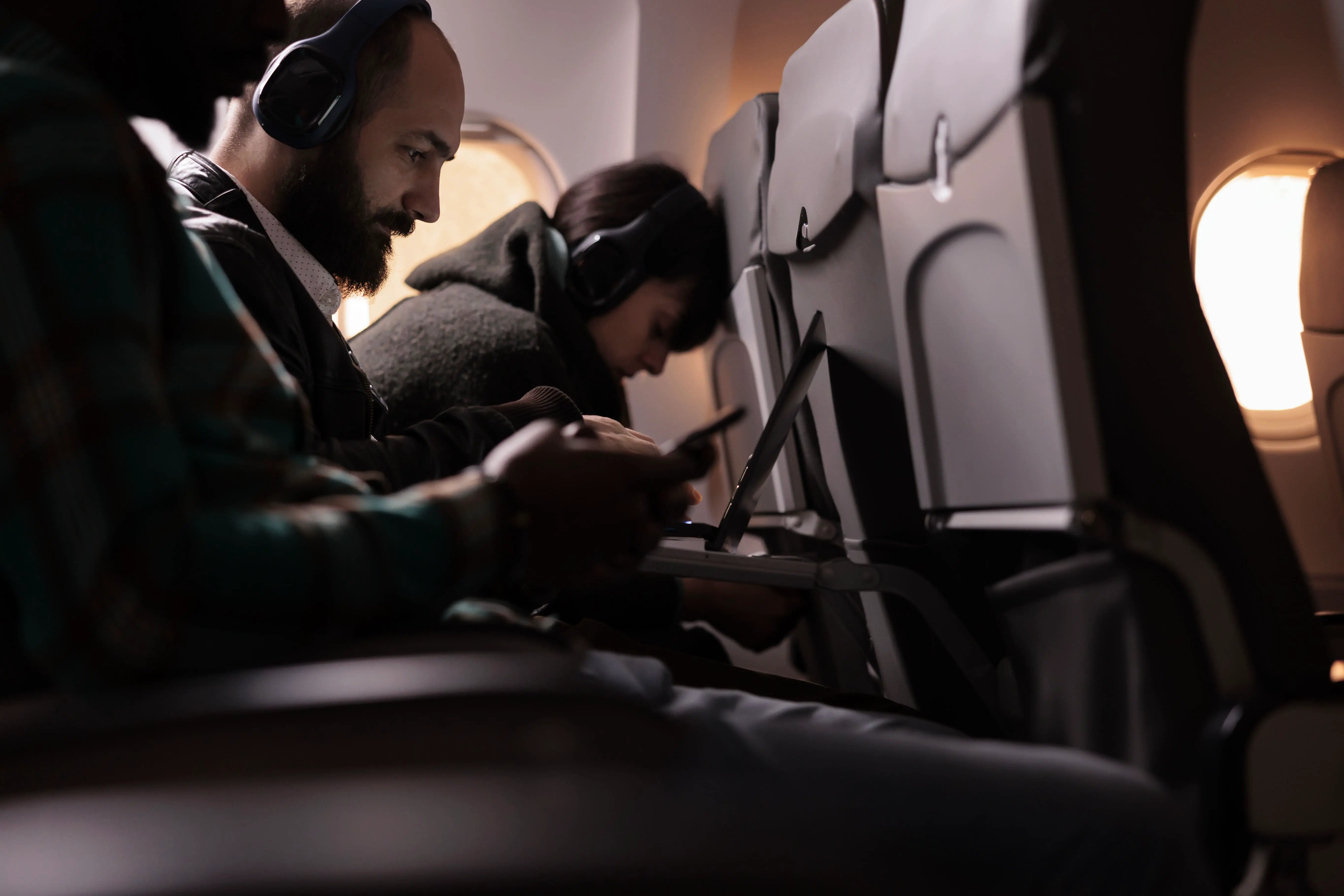
You've crossed half the globe to close a key deal, but your body still thinks it's 3 a.m. Jet lag doesn’t care about your schedule and can ruin your productivity when you need to be sharp the most.
Luckily, with the right strategy before, during, and after your flight, you can reduce its effects. In this practical guide, you'll find the keys to staying on track , even when your internal clock is out of sync.
What is jet lag and hoe does it affect professionals? Jet lag is a temporary disruption of your circadian rhythm , your internal biological clock. It happens when you cross at least three time zones in a short period, and your body doesn't adjust to the new time zone.
On a leisure trip, you can afford a day or two to adjust. But on a business trip, time is tight , and jet lag becomes a direct obstacle to your performance.
Main effects of jet lag Jet lag symptoms typically last one day for each time zone crossed. However, factors like age, stress, or the direction of travel (worse when heading east) can extend them. In addition to fatigue , jet lag can manifest as:
Difficulty concentrating and thinking clearly.Lack of coordination and slow decision-making.Digestive and sleep disorders .Mood swings and lower stress tolerance.Tips before the flight to avoid jet lag Proper preparation in the days leading up to your trip can drastically reduce jet lag symptoms. It's not just about getting more sleep, but gradually adjusting your physiological rhythms to the destination time zone.
Adjust your schedule before flying Four or five days before your trip, begin to gradually modify your sleep and eating schedule:
If you're traveling east : go to bed and wake up 30 to 60 minutes earlier each day.If you're traveling west : do it 30 to 60 minutes later.Do the same with your main meal times: have breakfast, lunch, and dinner progressively closer to the time zone you're heading to. This gradual adjustment of your digestive rhythms is called chrono-nutrition .
Choose flights that help you acclimate better Sometimes, you can't choose your flight schedule. But, if possible, keep the following in mind:
If you're traveling east : a night flight is better so you can sleep on the way and land in the morning or midday, already in the new time zone.If you're traveling west : it's better to take flights that arrive in the afternoon so you can go to bed later without disrupting your rhythm.In any case, avoid flights that force you to stay awake the entire first night or land in the middle of the local night, as they make adaptation harder.
Avoid accumulating fatigue Although it’s tempting to sleep less, thinking it will help you rest more during the flight, this is a mistake. Accumulated fatigue worsens jet lag symptom s and increases the risk of insomnia at your destination.
Try to get a good night's sleep in the two nights leading up to your trip . A well-rested body responds better to time changes and adapts more easily to new routines.
Strategies during the flight to minimize jet lag The flight is a key opportunity to start reprogramming your body . Instead of binge-watching shows, follow these tips.
What to drink? Hydration is one of the key factors. The low humidity in the cabin (similar to that of the desert) promotes dehydration, which worsens fatigue, reduces concentration, and can cause headaches.
For this reason, it’s essential to drink water continuously during the flight, ideally a glass every hour. Avoid alcohol and caffeine , as they dehydrate and disrupt sleep.
When to sleep Try to sync your sleep hours with your destination's time zone , even if it means sleeping when you'd normally be awake. For this, don't forget these three essentials:
Eye mask Earplugs Comfortable clothing There are apps like Headspace or Calm that can help with guided meditation sessions, which are very useful for falling asleep in uncomfortable environments.
What to do Another important aspect is to avoid prolonged exposure to screen s. The blue light emitted by electronic devices interferes with melatonin production (the hormone that regulates sleep).
Tip 💡
Tip 💡
If you need to use your phone or tablet, activate night mode or turn the brightness down to the minimum.
Lastly, don't spend the entire flight in your seat. Get up every hour and a half to stretch and walk around the aisle. This not only improves circulation and prevents physical discomfort but also helps reduce the feeling of accumulated fatigue.
What to do after a flight to avoid jet lag The first 24 hours after landing are crucial. This is where the battle against jet lag is won (or lost).
Play with light Natural light (or the lack of it) is undoubtedly your best ally. Keep this in mind when leaving the airport:
If you've traveled east: avoid sunlight in the early morning hours and seek it out around mid-morning or noon.If you're coming from the west: take advantage of the afternoon light to delay your biological clock.Eat properly Try to have a light meal as soon as you arrive, avoiding heavy or fatty foods. Foods rich in tryptophan (such as bananas, oats, or turkey) can help regulate melatonin naturally and promote restful sleep.
Have an early dinner , following the local time, even if you’re not very hungry. This will not only help with digestion but also send clear signals to your internal clock that the day is coming to an end.
Hydration remains key after the flight. Drink at least one liter of water in the first two hours after landing , especially if the flight was long.
If you've crossed more than six time zones or feel signs of dehydration, you can incorporate drinks with electrolytes . Avoid sugary or caffeinated beverages, as they only contribute to further imbalance in your body.
Sleep routines after arriving at your destination When it comes to sleep, it's crucial to establish a fixed bedtime and wake-up time from day one. Although your body might not be fully synchronized yet, following a clear routine helps your brain recognize when to start and finish the rest cycle.
Avoid the temptation to take long naps during the day. If you're extremely tired, a short nap (no more than 30 minutes) can help you last until the evening.
When it's time to sleep, turn off all screens , dim the lights, and create an environment conducive to rest.
Physical exercise to speed up adaptation Movement also plays an important role. Taking a walk outdoors, doing light exercise, or even stretching in your accommodation can help you clear your mind, improve your mood, and speed up the circadian adjustment.
Accommodations that favor rest The environment in which you sleep after a long flight can either accelerate (or hinder) your adaptation to the new time zone.
Quiet apartments fully equipped kitchen, they allow you to follow your eating schedule without relying on restaurant hours.
Another key factor is having a comfortable space to work . Many business travelers need to connect as soon as they arrive or prepare meetings in a functional, interruption-free environment.
Unlike many hotels, where cleaning schedules or front desk traffic can disrupt your routine, a well-managed corporate apartment offers the privacy and flexibility you need to follow your own rhythm.
Benefits of booking with Apartool to minimize jet lag With Apartool , companies can accommodate their teams in apartments specially selected for corporate stays. These spaces are designed to offer comfort, autonomy, and efficiency from the very first moment.
What advantages does Apartool offer?
Quiet accommodations, without disturbing noises or interruptions. Fully equipped kitchen to maintain healthy eating routines. Flexible check-in and check-out, ideal after long flights or at unusual times. We hope we’ve helped you create a solid routine to combat jet lag. From now on, count on Apartool to stay in quiet spaces, with all the amenities needed to adapt to the new time zone and improve your performance from day one.
Frequently asked questions about jet lag on business trips How can I prevent jet lag before a business trip? Gradually adjust your sleep schedule a few days before departure, stay hydrated, and avoid heavy meals and alcohol on the flight to reduce jet lag on arrival.
What should I do during the flight to reduce jet lag? Set your watch to the destination time zone as soon as you board, stay hydrated, move periodically, and try to sleep or stay awake according to the new time zone.
How long does it typically take to recover from jet lag? Recovery usually takes about one day per time zone crossed, though light exposure, hydration, and a regular sleep schedule can help speed up adjustment.
Does accommodation affect how quickly I recover from jet lag? Yes, staying in a comfortable, quiet apartment with a proper kitchen and sleep environment helps travelers rest better and adjust faster than a noisy hotel room.
What should I avoid after landing to minimize jet lag? Avoid long naps, excessive caffeine, and skipping meals — instead, get natural daylight and stick to the local meal and sleep schedule as soon as possible.